
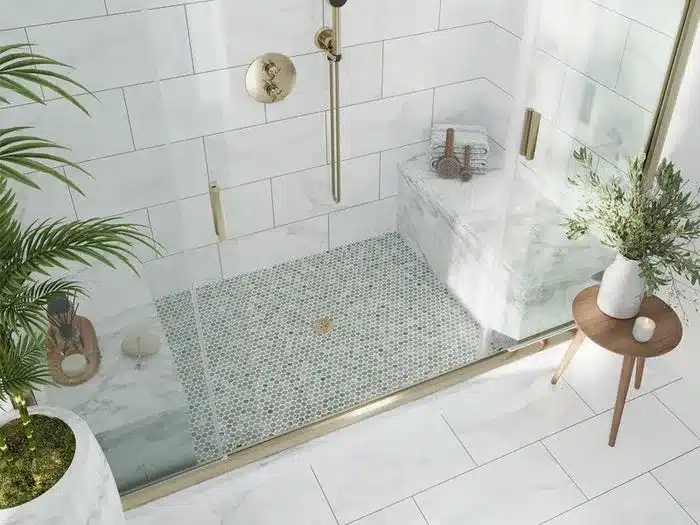
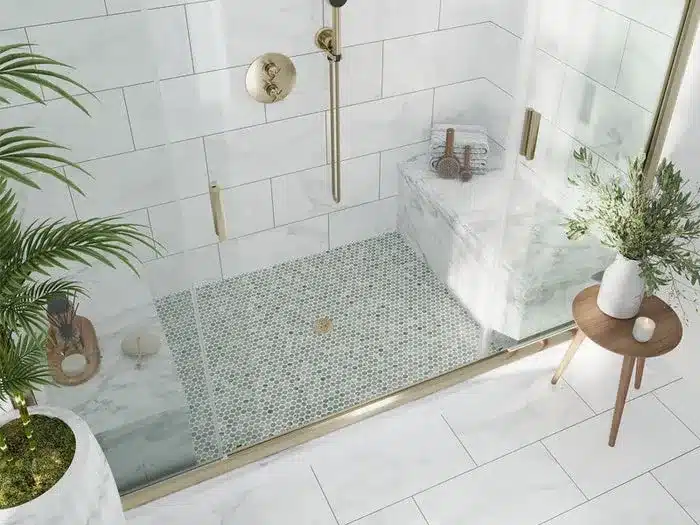
Marble shower mosaics are a particularly popular decorative choice for homeowners who want to combine aesthetics and functionality in their bathrooms. In fact, mosaic is one of the most popular decorative elements for bathrooms, adding a timeless touch of elegance to your everyday space.
Made of small pieces called tesserae, bathroom mosaic can be made of marble, ceramic, glass, mother-of-pearl or even metal. Installing a mosaic shower does, however, call for precautions, particularly for waterproofing, provided under the tiles by a liquid waterproofing system. In this article you will find out why to choose this covering for your shower, the precautions to take before laying, the right waterproofing products and care advice.
Why choose marble mosaic for your shower?
Marble, Marble mosaic has been used in art and architecture since ancient times, and is now the material of choice for contemporary showers. If you're still hesitating to take the plunge, find out why marble mosaics deserve your full attention.
An aesthetic and timeless choice
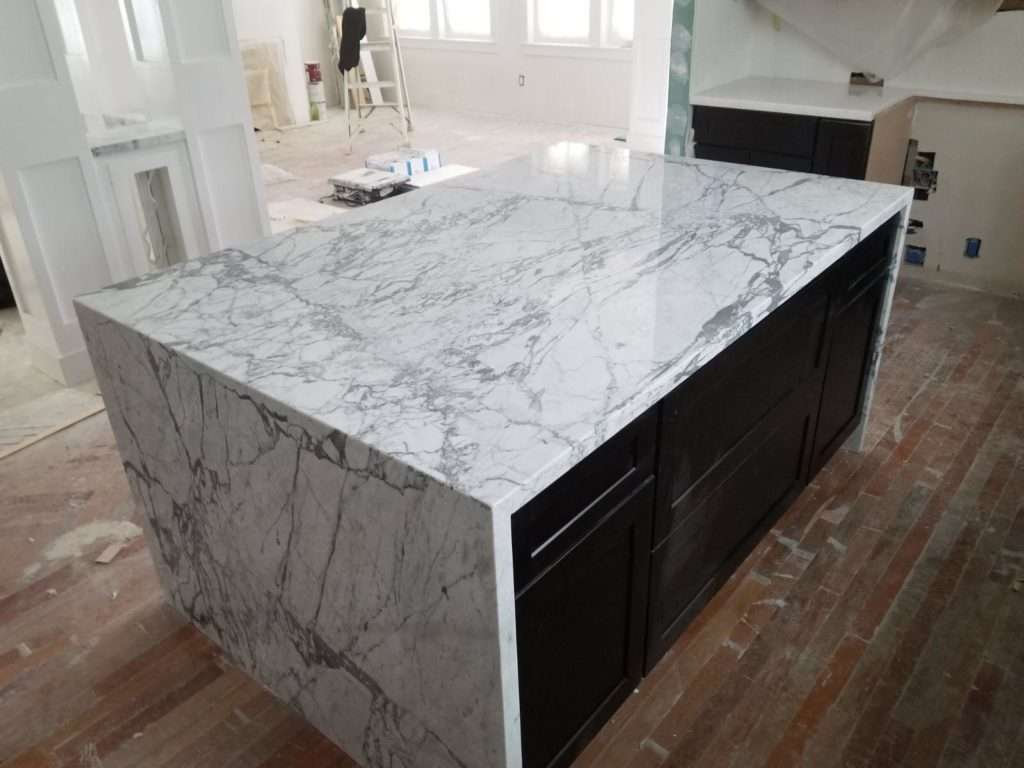
The power of attraction of marble shower mosaic lies above all in its refined aesthetic. Its polished or matt tesserae capture the light beautifully, creating a play of reflections that illuminate the space. Each piece of marble reveals unique veins and nuances, giving your shower unequalled visual depth. This natural uniqueness transforms a simple functional space into an exceptional and inspiring environment.
Carrara white marble, in particular, is distinguished by its immaculate background and delicate grey veins, ideal for adding luminosity and elegance. This noble stone instantly evokes luxury and refinement, perfect for those seeking an uncompromisingly sophisticated atmosphere.
Adaptable to modern and classic styles
Far from being confined to a single style, marble mosaics blend harmoniously into a variety of decorative settings. Whether you're looking for a sleek modern interior or a classic bathroom, marble mosaics can be adapted to suit any setting.
The variety of patterns available (herringbone, hexagons, borders) lets you personalise your shower to your taste. The range of formats, from star patterns to intricate weaves, also offers endless creative possibilities for your most ambitious projects.
Functional advantages in humid environments
Beyond its looks, marble mosaic has a practical advantage in a shower: the density of joints in small formats improves a floor’s grip, especially with a non-polished finish.
The finish actually matters more than the size of the tesserae. Under NF EN 14231, the pendulum friction test, the Negro Marquina data sheet published by Levantina in March 2025 gives under 15 SRV for a wet polished finish, under 35 SRV for honed and over 45 SRV for bush-hammered: for a shower floor, that is the value to ask the supplier for.
Marble mosaic stands up well to foot traffic and splashes, provided it is carefully laid and the stone is not water-sensitive.
A good conductor of heat, marble is also compatible with underfloor heating systems, offering a pleasant feel to the touch. Its smooth texture makes it easy to clean and maintain, thanks in particular to the flat surface of the tesserae, which effectively removes water stains.
Essential precautions before installation
A successful mosaic installation marble shower is above all based on meticulous preparation. Careful application not only guarantees an attractive result, but one that lasts, whereas careless application can lead to visible peeling, cracking or deformation.
Prepare a clean, dry surface
Before laying any flooring, you need to pay particular attention to the condition of the subfloor. Start by checking that the surface is level with a spirit level. A perfectly flat surface is essential to avoid irregularities that will compromise the adhesion of the mosaic.
Meticulously remove any dust, plaster residue or old mortar that could hinder adhesion. If you notice any roughness, don't hesitate to sand the surface. Similarly, any cracks or holes, however small, should be filled.
For areas exposed to water splashes, which is obviously the case for a mosaic shower, prior waterproofing is essential. After cleaning, make sure the substrate is completely dry before continuing. This step prevents rising damp that would compromise the installation.
Use a suitable primer
Applying a primer is a fundamental step. This product significantly improves adhesion between the substrate and the coating, creating a strong, durable bond.
Apply it with a roller, following the manufacturer's instructions precisely. The primer creates a homogeneous layer that helps the coating to spread and set better, considerably reducing the risk of delamination later on.
For plasterboard surfaces in particular, this fixative is essential to ensure optimum adhesion of the tesserae. Allow to dry according to the manufacturer's recommendations before moving on to the next step.
Choosing a mortar adhesive compatible with marble
The choice of adhesive mortar is a critical point in the installation of a marble mosaic. Not all adhesives are suitable for this noble material. Ordinary cement powders risk causing discolouration that will permanently alter the decorative appearance.
Choose an adhesive made for natural stone, white for light marbles. For moisture-sensitive stones, such as green marbles or Nero Marquina, an epoxy adhesive with no mixing water is recommended (Mapei, Natural Stone Institute).
Adhesive manufacturers offer products specifically for natural stone, white for light or translucent stones, grey for opaque stones. Follow the manufacturer’s instructions when mixing.
Waterproofing and grouting: the right products to use
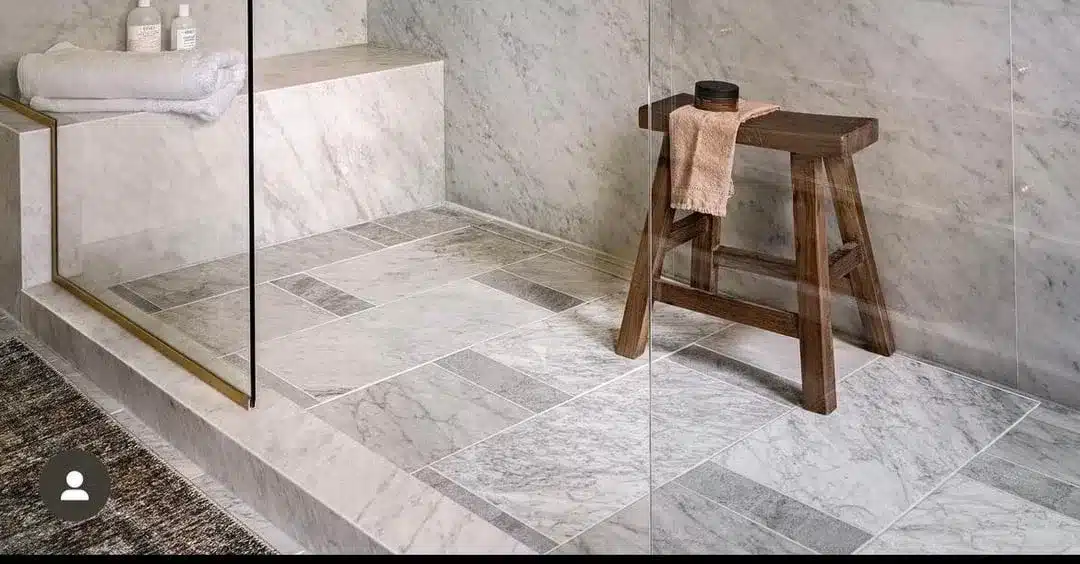
Waterproofing is a crucial element in guaranteeing the longevity of a marble shower mosaic. Specific products are needed to ensure this essential function.
Liquid waterproofing membrane
A liquid waterproofing membrane, applied by roller or brush under the tiles, forms a continuous barrier against water. Drying time, treatment of corners and compatibility with the adhesive are given on the data sheet of the chosen system.
Why choose epoxy resin joints?
Epoxy grouts offer several advantages for a marble mosaic: they are watertight, resistant to stains and mould, and their smooth surface attracts little dirt. Some allow you to bond and grout in a single operation.
When to use a high-performance cement joint
For some installations, a high-performance water-repellent, anti-mould cement grout may be suitable. It remains less resistant than epoxy to stains and moisture.
Quantity of product required depending on surface
The quantities needed depend on the size of the tesserae and the depth and width of the joints. Adhesive and grout manufacturers offer online calculators to estimate them.
Maintenance and mistakes to avoid with marble mosaics
To preserve the beauty of your marble shower mosaic over the years, proper care is essential. This natural stone requires special care to maintain its shine and durability in a damp environment like the bathroom.
Gentle, regular cleaning of surfaces
Weekly maintenance of your marble mosaic is essential to prevent the build-up of mould and other dirt. Choose a gentle pH-neutral cleanser specially designed for marble. Airing the shower after each use also helps to limit excessive moisture. For best results, always wipe surfaces with a microfibre cloth after each shower to remove soap and water residues.
Products to be avoided at all costs (vinegar, acids)
It is essential to avoid acidic cleaners (vinegar, lemon juice) and products containing chlorine, which attack the surface of marble. Abrasive sponges should also be avoided, as they scratch the stone beyond repair. Ordinary household products, even those labelled «all-purpose», often contain ingredients that gradually degrade the marble. Even diluted, white vinegar is too corrosive for this delicate stone.
The Natural Stone Institute gives the same instruction and adds a second: products containing lemon, vinegar or other acids dull or etch calcareous stones, and scouring powders contain abrasives liable to scratch the stone. A neutral cleaner, stone soap or a mild washing-up liquid in warm water is enough.
Water repellent: when and how to apply it
Applying an impregnating sealer is crucial to protect marble from stains and moisture. To check whether new sealing is needed, carry out the “ water test ”: place a few drops of water on the surface, and if they are absorbed quickly, a new treatment is needed. The frequency is set by this test, not by a calendar: no technical source publishes one. Apply the product evenly with a soft cloth, leave it to penetrate for the time given on the product’s data sheet, then wipe off the excess.
Preventing stains and mould in joints
Joints are often the weak point of a mosaic shower. To prevent the formation of mould, ensure adequate ventilation and maintain a reasonable level of humidity. Clean the joints regularly with a soft toothbrush to remove any residue. For particularly exposed areas, consider applying a water-repellent product that permanently waterproofs the joints after thorough cleaning. This protective barrier effectively prevents soiling and extends the life of your installation.
Not all white deposits along the joints are mould. The ICOMOS-ISCS illustrated glossary of stone deterioration patterns calls efflorescence this cluster of usually white, powdery, loosely bound crystals, which forms when water carrying salts from the stone’s pore network moves to the surface and evaporates: it is not deposited dirt, and treating it means treating the moisture that feeds it.
Key points for a successful marble mosaic shower
To install your marble shower mosaic perfectly, there are a few technical aspects that need special attention. Firstly, invest in quality tools: an electric tile cutter for precise cuts, a suitable notched trowel and a rubber mallet to gently adjust the tesserae without damaging them.
Double buttering is recommended for the best bond: adhesive is applied to the substrate and to the back of the mosaic sheet. The fall of the shower floor towards the drain follows the rules of the applicable DTU.
Wait for the adhesive to cure fully, for the time stated by its manufacturer, before grouting. Rushing this step can shift the tesserae.
Don't forget to check alignment regularly with a level or laser during installation. In critical areas such as corners, systematically use sealing strips to prevent seepage.
Finally, after laying is complete, apply a sealer made for marble. This sealer will protect your mosaic against stains over time and preserve its natural beauty despite daily exposure to water.
Frequently asked questions
Does a marble mosaic in a shower need sealing?
Yes, waterproofing a marble mosaic in a shower is highly recommended. Because marble is naturally porous, it can absorb moisture and stains without adequate protection. A waterproofing treatment protects the stone from water infiltration and preserves its beauty over the long term.
Which cleaning products should be avoided on a marble mosaic?
Acidic products such as vinegar, lemon juice or cleaners containing chlorine should be avoided at all costs. These substances can attack and damage the marble surface. Instead, opt for gentle, pH-neutral cleaners specially designed for marble.
How do you look after a marble mosaic shower properly?
For best results, clean weekly with a mild product made for marble. Wipe the surface after each use to avoid soap and water residue. Ensure good ventilation and renew the sealer when the water-drop test calls for it.
Is marble mosaic suitable for a shower floor?
Yes, marble mosaic is suitable for a shower floor. The small tesserae and abundant joints improve grip, especially with a non-polished finish. Check before ordering that the stone is not water-sensitive.
What is the best method for grouting a marble mosaic in a shower?
To grout a marble mosaic in a shower, it's best to use an epoxy resin grout. This type of joint provides an excellent seal, resists stains and mould, and is more durable than traditional cement joints in a damp environment.