
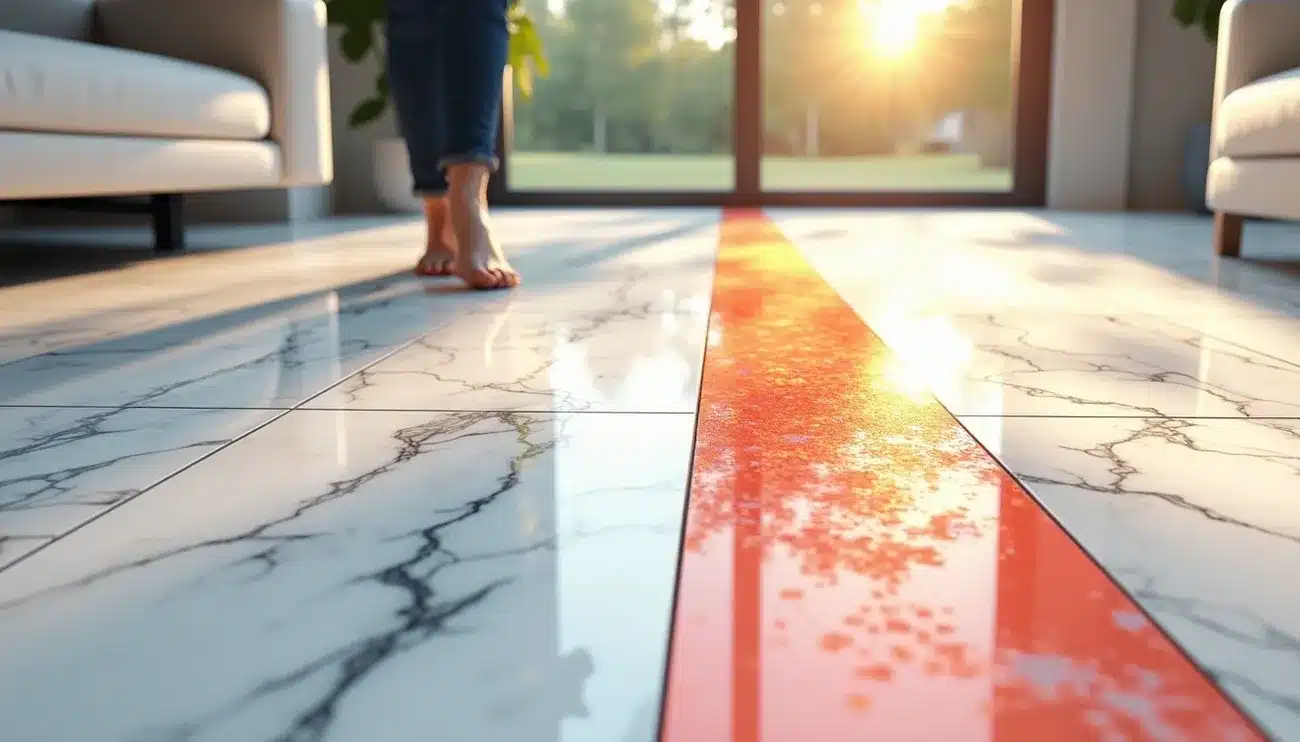
Marble is compatible with underfloor heating, provided a few laying rules are followed. This compatibility is explained by thermal properties that deserve your attention.
The main reason for this compatibility lies in marble’s good thermal conductivity: the material efficiently transmits heat from the system to the floor surface. It also has significant thermal inertia, which means it takes longer to heat up but then holds the heat well.
In this article, you'll discover the specific thermal properties of marble, its advantages and limitations with underfloor heating, and the technical requirements for successful installation. We'll also compare marble with other compatible floor coverings to help you make the best choice for your needs.
The thermal properties of marble for underfloor heating
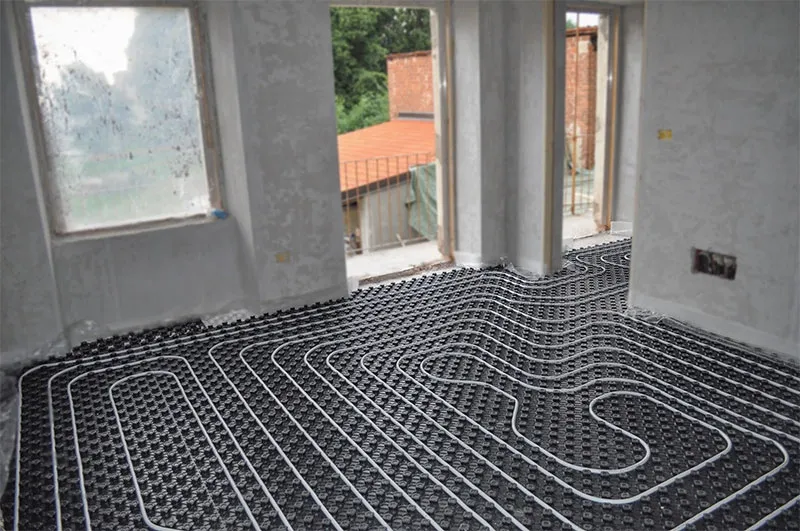
To understand the compatibility of marble with underfloor heating, it is essential to examine its specific thermal properties. These characteristics determine how the material interacts with heat and why it is an appropriate choice for your underfloor heating system.
Why is marble feels cold to the touch
Marble feels cold to the touch, even at room temperature. This phenomenon is scientifically explained by its high thermal effusivity. When you place your hand on marble, it quickly absorbs the heat from your skin thanks to its high thermal conductivity. This ability to extract heat creates the impression of coldness, even though the material is at the same temperature as its surroundings.
Thermal conductivity: definition and values for marble
Thermal conductivity measures a material’s ability to transfer heat. It is expressed in watts per metre per kelvin (W/(m·K)). That of a stone is of the order of a few W/(m·K), whereas that of wood is only a fraction of a W/(m·K): this is what makes the two feel so different. The precise value varies with the stone and should be requested from the supplier.
This property makes marble a good heat conductor compared with other building materials such as wood. It is this characteristic that allows marble and underfloor heating to work together, carrying heat from the system to the surface.
The difference between conductivity and thermal inertia
Although often confused, thermal conductivity and thermal inertia are two distinct properties. Conductivity determines the speed at which heat passes through the material, while thermal inertia defines its capacity to store and then gradually release this heat.
Marble has a high bulk density, from 2,660 to 2,720 kg/m³ on the data sheets consulted under NF EN 1936, which gives it significant thermal inertia. The floor therefore takes longer to reach temperature, but then holds it.
Advantages and limitations of marble with underfloor heating
Combining marble with underfloor heating has considerable advantages, as well as certain limitations that should be carefully considered before opting for this solution.
Even heat distribution
Marble spreads heat evenly across the surface thanks to its conductivity. Given its inertia, this spreading is gradual rather than immediate.
Ability to retain heat
As well as spreading heat, marble stores it. Its mass gives it strong thermal inertia: it continues to release the stored heat for some time after the heating is switched off.
Limits related to thickness and density
Despite these advantages, there are some limits. The thicker the slab, the longer heat takes to pass through it. The thickness is therefore chosen with the heating engineer and according to the heating system manufacturer’s requirements.
Risk of cracks and expansion
Another point to watch is the risk of cracking. Differences in expansion between the screed and the floor covering can cause tiles to crack. To limit this, laying follows good practice, and bringing the screed up to temperature, before and after laying, follows the system manufacturer’s procedure and the applicable DTU.
This resistance to temperature variations can be measured, and the existing test specifically targets marble: the NF EN 16306, “Determination of resistance of marble to thermal and moisture cycles”, April 2013, is among the test standards for natural stone listed by CTMNC. Granite has no equivalent standard on this point, which gives a simple question to ask the supplier: has the variety supplied been declared under this standard?
Technical conditions for successful installation
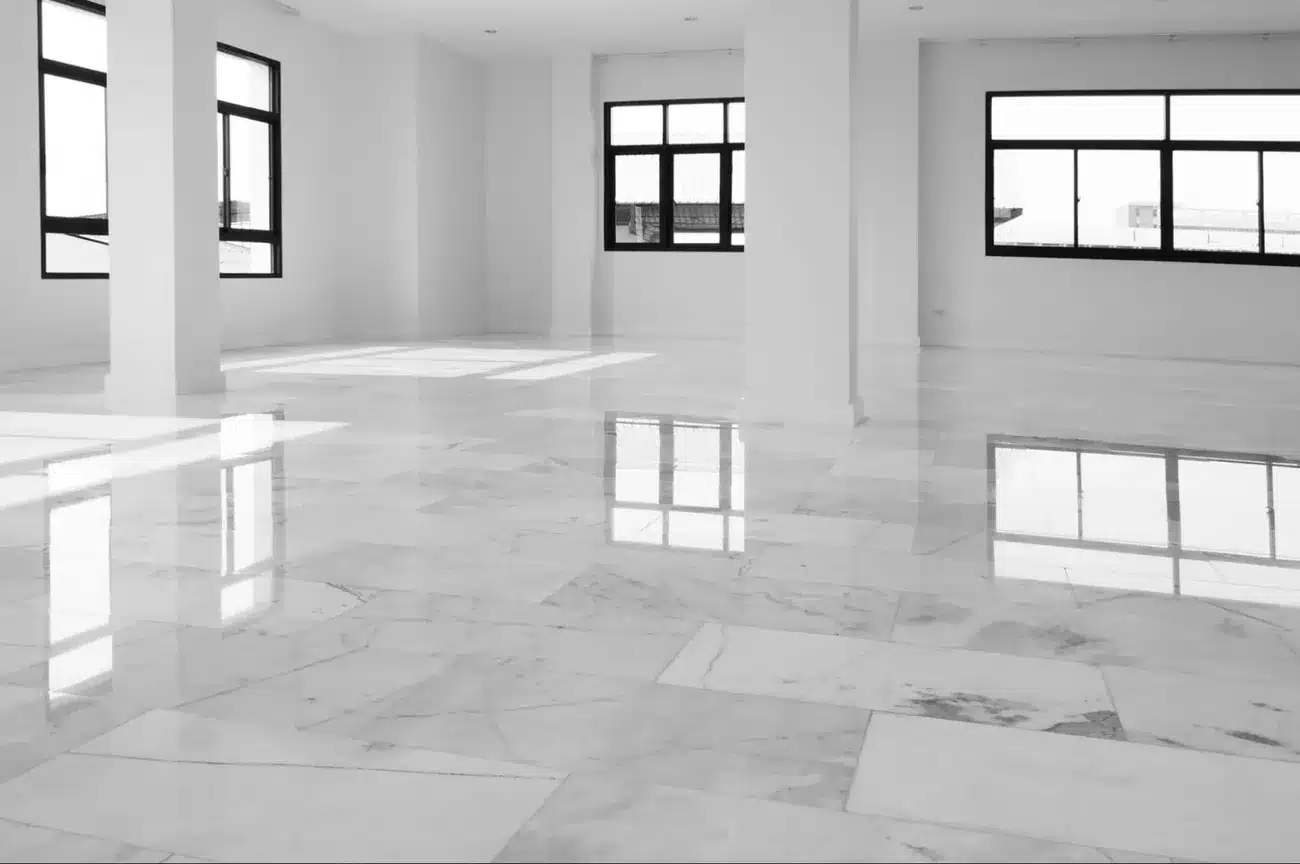
To successfully install marble over underfloor heating, it is essential to comply with technical standards. These requirements guarantee not only the longevity of your floor covering, but also the efficiency of your heating system.
Maximum recommended temperature for marble
The surface temperature of a heated floor is limited to 28 °C by French regulations, the order of 23 June 1978, article 35. This limit is for the comfort and health of occupants; it was not set for the stone.
Choosing the right adhesive and joints
The use of a suitable adhesive is crucial to the longevity of the installation. Choose a flexible adhesive and a C2 S1 or C2 S2 deformable joint. These products effectively absorb slight thermal expansion of the substrate and prevent cracking. For large formats, an epoxy or resin-based adhesive offers superior adhesion.
Adhesive fixing calls for one further check. Some stones change shape on contact with the mixing water of a cement-based tile adhesive, and Mapei’s technical bulletin on moisture-sensitive stones recommends a water-free laying product for these, such as a reactive resin.
Drying time for screed before laying
Respecting drying times is crucial. These times, for a cement or an anhydrite screed, are those of the DTU and of the screed manufacturer’s data sheet: measure the residual moisture before laying rather than counting weeks. On an anhydrite screed, sanding off the laitance before laying is a common step.
Progressive ignition of the heating system
Once the marble is laid, the heating is brought back up gradually, following the heating system manufacturer’s procedure, to avoid thermal shock.
Compatible with electric and hydraulic heating
Marble suits both main types of underfloor heating, electric and hydronic.
Comparison of marble with other compatible coatings
When considering an underfloor heating system, it's important to compare different floor coverings in order to choose the most efficient solution.
Marble vs porcelain stoneware
Porcelain stoneware, being thinner, transmits heat faster; marble, thicker and denser, stores more of it and takes longer to warm up. Both are compatible with underfloor heating.
Marble vs parquet
Marble warms up more slowly than some types of wooden flooring. Floorings compatible with underfloor heating are labelled as such by their manufacturer, with their own temperature limits.
Marble vs vinyl and PVC
Unlike marble, which holds heat for a long time, vinyl and PVC coverings heat up and cool down quickly, with temperature limits set by their manufacturers.
Marble vs waxed concrete
Polished concrete floors are highly conductive, allowing your space to heat up quickly. Marble, on the other hand, adds a touch of luxury to your decor, but takes longer to heat up. Waxed concrete shares good thermal conductivity with marble, but has the advantage of offering a multitude of finishes.
Key facts about marble and underfloor heating
In summary, marble is compatible with underfloor heating. Its conductivity allows heat to be transmitted efficiently to the floor surface, and its mass spreads it evenly, at the cost of a slower warm-up.
Underfloor heating runs at low temperature, which makes it compatible with low-temperature heat sources such as heat pumps.
Marble also retains a significant amount of heat thanks to its thermal inertia. This property means that the floor stays warm for longer, even after the system has been switched off. In practical terms, marble continues to radiate gentle, even heat for several hours after the heating system has been switched off.
In terms of care, a heated marble floor is looked after like an ordinary marble floor. The longevity of the whole depends above all on following the laying instructions.
Frequently asked questions
Is marble a good choice for underfloor heating?
Yes, marble is compatible with underfloor heating. Its thermal conductivity allows heat to spread evenly, and its mass lets it hold the heat, at the cost of a slower warm-up.
What is the maximum recommended temperature for a heated marble floor?
The surface temperature of a heated floor is limited to 28 °C by French regulations (order of 23 June 1978, article 35). This limit is for the comfort of occupants and applies to all floor coverings.
How do you install marble correctly over underfloor heating?
Use an adhesive and grout suited to heated substrates, of type C2 S1 or C2 S2, or a water-free adhesive for moisture-sensitive stones. Respect the screed drying times and the system manufacturer’s gradual heating procedure.
Is marble more efficient than other floor coverings for underfloor heating?
Marble is effective, and other coverings such as porcelain stoneware are too: being thinner, porcelain stoneware transmits heat faster, while marble stores more of it.
What are the advantages of marble over other materials for underfloor heating?
Marble offers good thermal conductivity, even heat distribution and a good capacity to hold heat. It also adds a touch of luxury to your interior.